
You know the pattern.
It starts in the late afternoon. That dull ache in your heels after a long day on your feet. The heaviness that creeps into your calves. The tingling that spreads through your toes the moment you finally sit down to rest.
You massage them. You soak them. You try to ignore it.
And yet—the relief never lasts. By morning, they feel just as tired, just as stiff, just as drained.
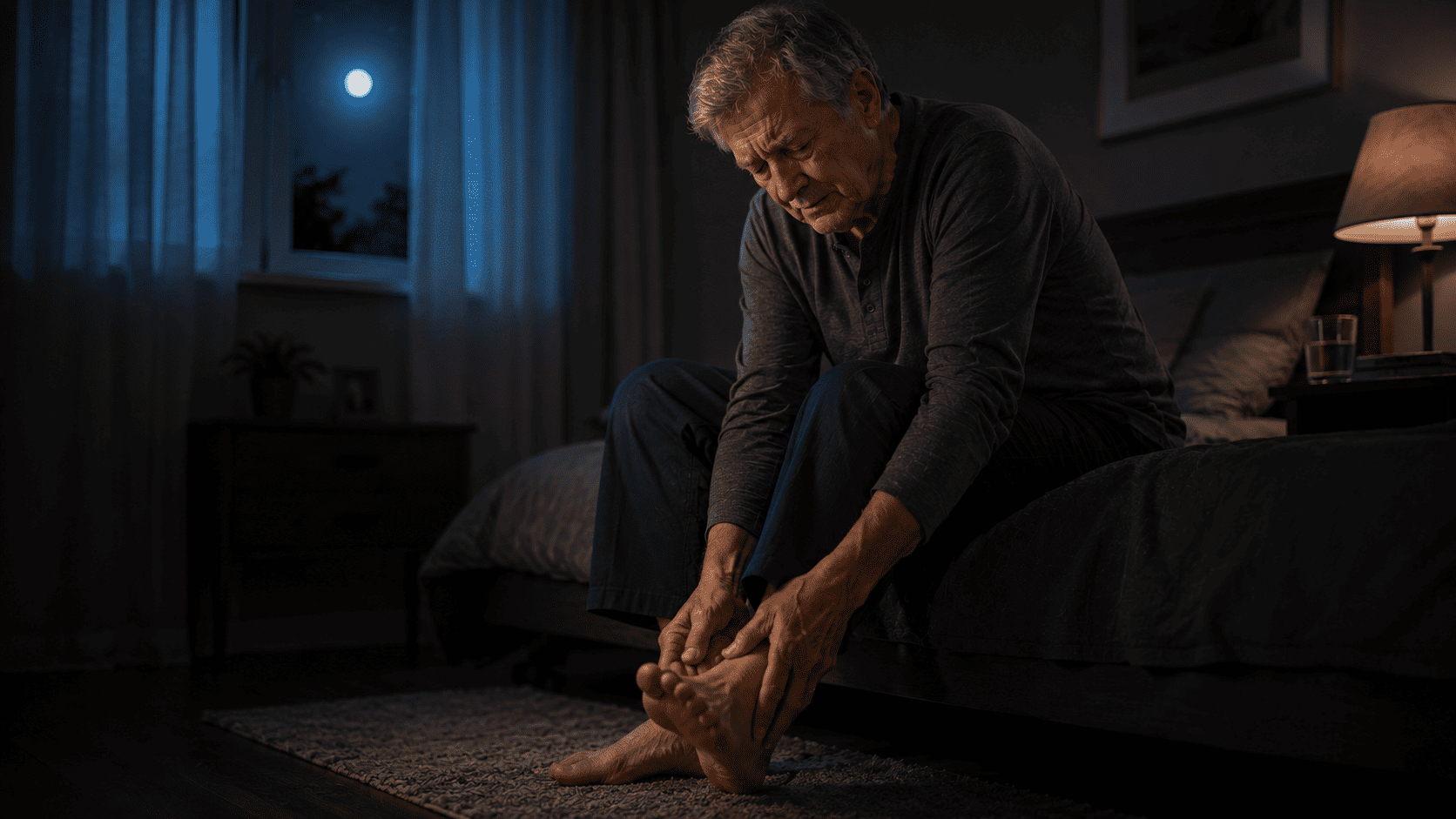
That's not your fault. And it doesn't mean nothing can be done.
It means that none of the things you've tried have addressed the real mechanism—the mechanism doctors have known about for decades, but that never makes it into a rushed 5-minute consultation.
If you've been dealing with tired, aching feet, poor circulation, or that restless sensation that won't let you sleep—and you refuse to accept that "this is just how it is"—then keep reading. What you're about to learn could be the turning point.
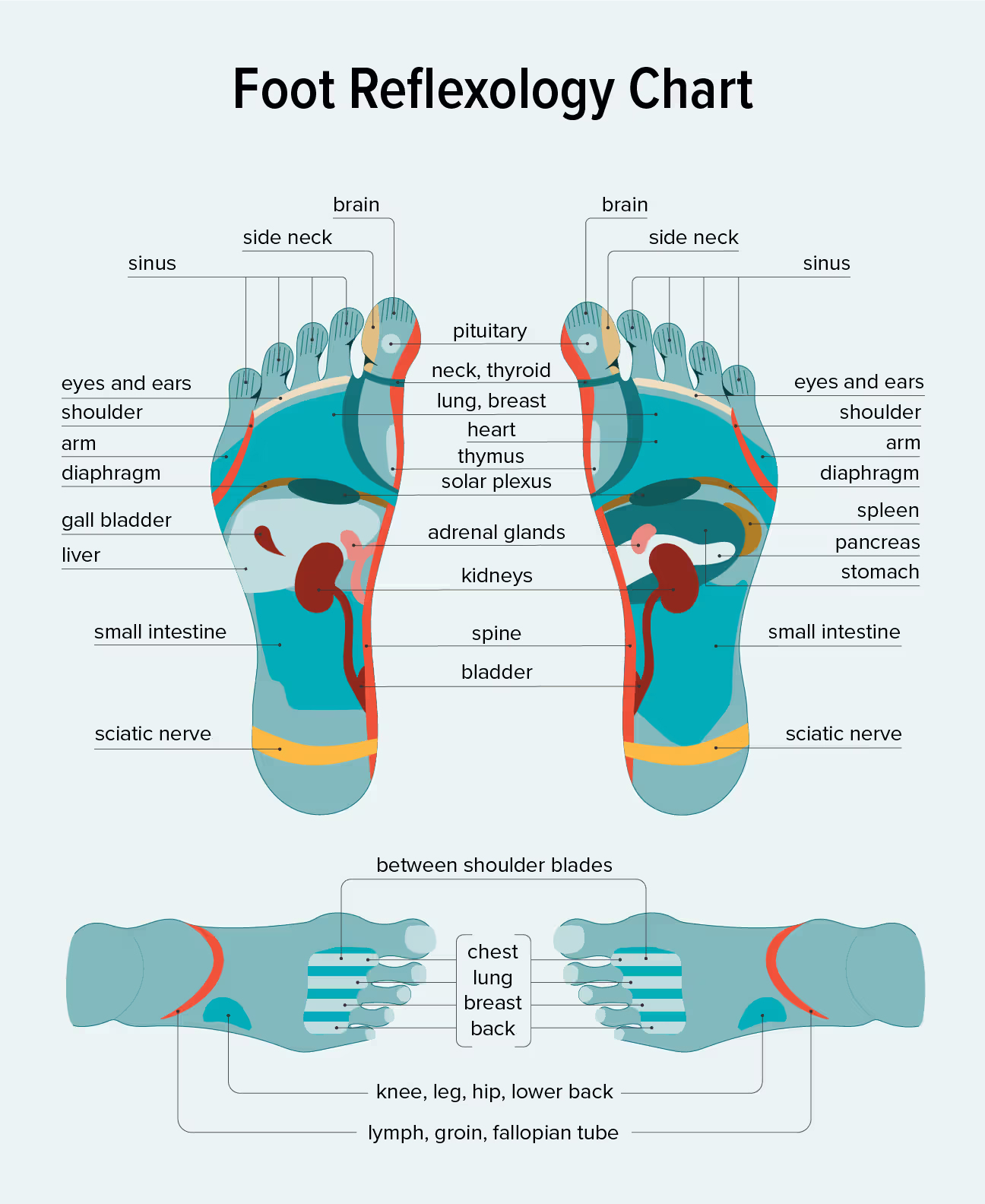
What They Don't Tell You: The Reflexology "Map"
Your feet are not just the things that carry you through the day. They are a biological control panel—a concentrated network of nerve endings connected to every major system in your body .
This isn't new-age pseudoscience. Reflexology—the practice of stimulating specific points on the feet to affect corresponding organs and systems—has been documented and studied for decades. The Institute of Electronics, Information and Communication Engineers has published peer-reviewed research confirming that stimulating these reflex zones promotes measurable blood flow throughout the body .
Here's the problem:
Most foot massagers treat your feet like generic templates. They assume everyone's feet are the same shape, same size, same pressure points in the exact same places. This is a catastrophic design flaw .
If your feet are larger than average? The nodes miss your toes and heels completely . If you have flat feet? The arches take all the pressure while the rest of your foot gets nothing .
Medical researchers discovered this years ago. They've documented cases where test subjects reported:
-
"The massage only hit specific spots—clearly didn't match my foot shape."
-
"I felt nothing in my toes or heels—the nodes completely missed them."
-
"My arches hurt, but the rest of my foot got zero stimulation."
And the real kicker?
Thermographic imaging revealed the truth. After using standard one-size-fits-all mats, only isolated areas showed increased circulation. But when subjects used mats designed for their specific feet? Blood flow rose across the entire foot—from toes to heels .
That's the difference between thinking you're helping your feet and actually helping them.
What You've Tried—And Why It Hasn't Worked
Massage rollers. They feel nice for a few minutes. Then the relief fades as quickly as it came. Why? Because they don't deliver sustained pressure to the full reflexology map—just whatever spots they happen to hit.
Foot spas with bubbles and heat. Yes, they're relaxing. But warm water alone doesn't stimulate nerve pathways. It's comfort without correction .
Shiatsu kneading machines. They grab and squeeze. But they can't fine-tune for your foot's unique arch height, width, or pressure sensitivity. If it doesn't fit your foot shape, it can't target the areas that actually need attention .
None of these approaches have solved the problem because none of them address the root cause:
The reflexology points on your feet aren't being activated properly.
And when those points don't get triggered, the connected systems in your body don't get the signal to increase circulation, reduce inflammation, or promote recovery .
The Science: What Foot Reflexology Actually Does
Here's the beautiful thing about reflexology that no one tells you:
Those nerve endings on the soles of your feet aren't just sensors—they're switches.
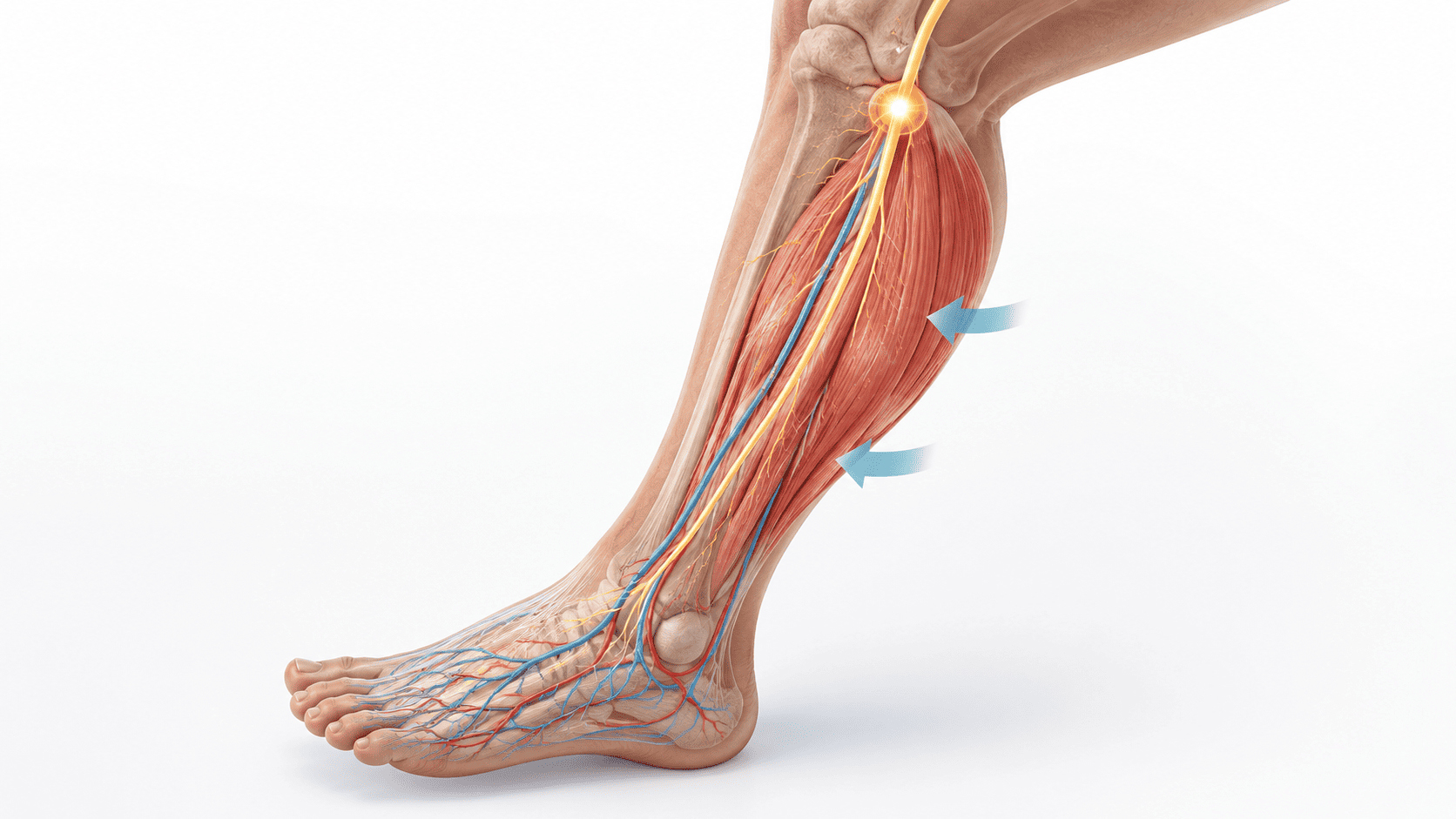
Press the right spot, and you send a signal. That signal travels up your nervous system. It tells your blood vessels to expand. It tells your body to release tension. It tells your muscles that it's time to relax and recover .
It's like having a remote control for your body's recovery system—located right under your feet.
And you don't need to memorize complex anatomical charts to use it.
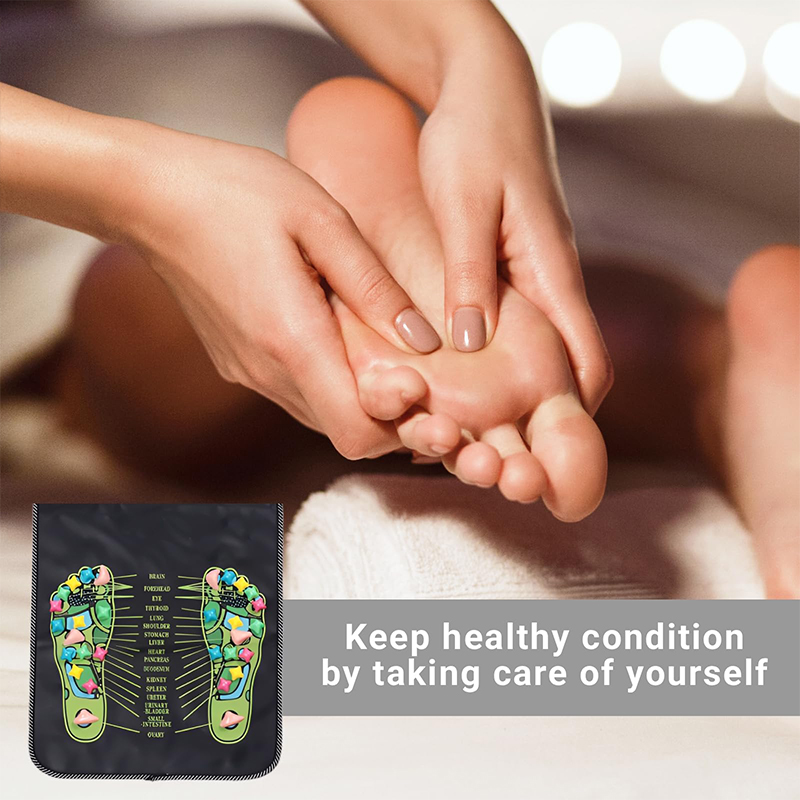
Studies have shown that consistent pressure on key foot reflex zones:
-
Improves blood circulation to the extremities
-
Relieves nerve tension and muscle tightness
-
Promotes relaxation and stress reduction
-
Supports metabolism and toxin elimination
But here's the catch: the pressure has to hit the right places. And it has to hit them evenly across the entire foot.
If your foot doesn't match the generic mat design—you get nothing .
The Missing Piece: Why One-Size-Fits-All Is a Lie
68.9 inches. That's not the length of your feet—it's the width of the product footprint designed to accommodate ALL foot types.
Imagine a mat that doesn't stop at your heels or crowd your toes. A surface large enough for any foot size—from petite to size 13 and beyond. A mat with so much coverage that your entire sole sits naturally, without needing to stretch, squeeze, or reposition .
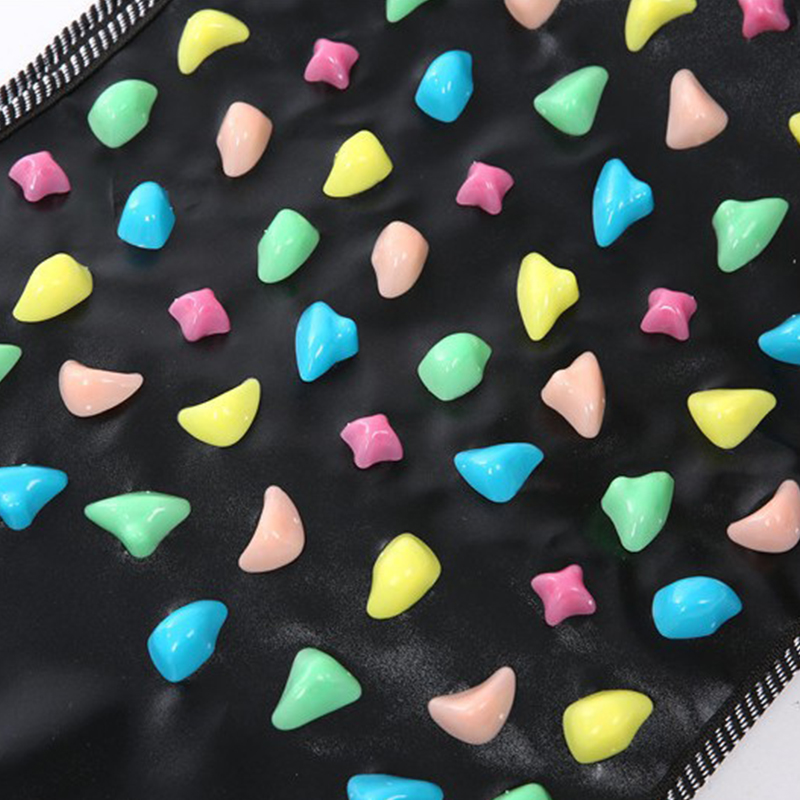
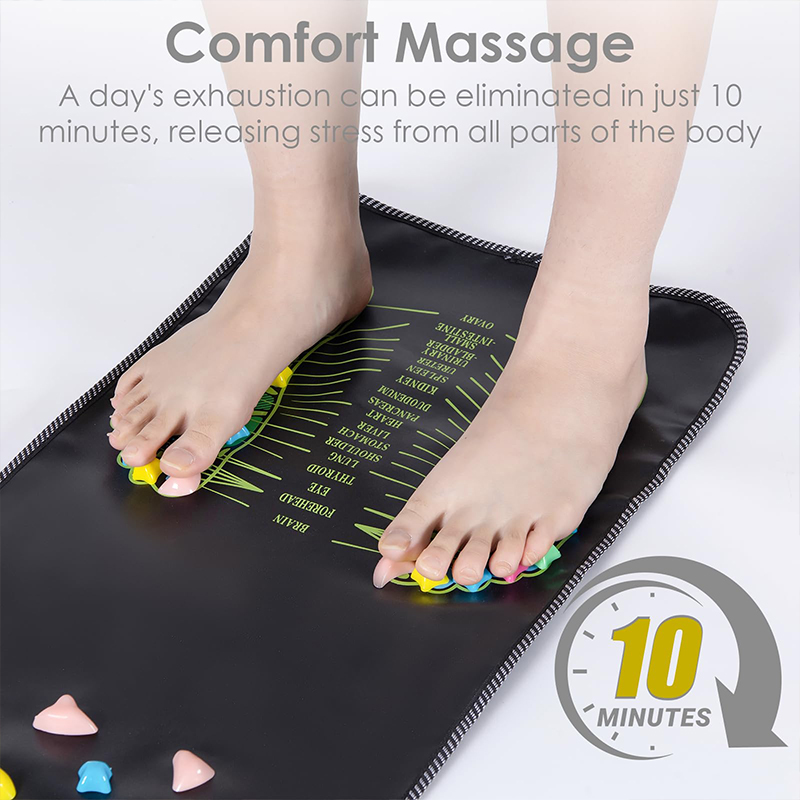
Now imagine that this mat doesn't just have acupressure nodes—it has them strategically placed to mirror the actual reflexology map . Not a generic pattern. A design that understands where the toes, arches, and heels actually are on a human foot.
Because when the nodes align with your anatomy? That's when the switch turns on.
Real People, Real Results
"I was skeptical—then I felt it working."
"I've tried so many foot products. My feet are just... tired. I stand all day. A friend recommended this mat and I thought, 'Sure, another thing that won't work.' But the first time I stood on it, I actually felt it—the points hitting the right spots. I could feel the tension releasing within minutes." — Carol R.
"It wakes me up better than coffee."
"I stand on this mat for a few minutes in the morning when I'm dragging. I'm not sure if it's the slight sensation or the circulation boost, but it genuinely wakes me up. It's become a non-negotiable part of my routine." — Brian K.
"My restless legs at night—gone."
"I get this awful restless feeling in my legs when I try to sleep. My feet just ache. I started standing on the mat for about 30 seconds before bed—and it actually helps. IMMENSELY. I don't fully understand the science, but I don't need to. It works." — Diane S.
Why Now?
For years, the only foot mats available were generic. They were designed for "average" feet—and we all know average doesn't fit anyone.
But recent research—and advances in materials and design—have finally made it possible to create a mat that doesn't compromise on coverage, pressure distribution, or durability.
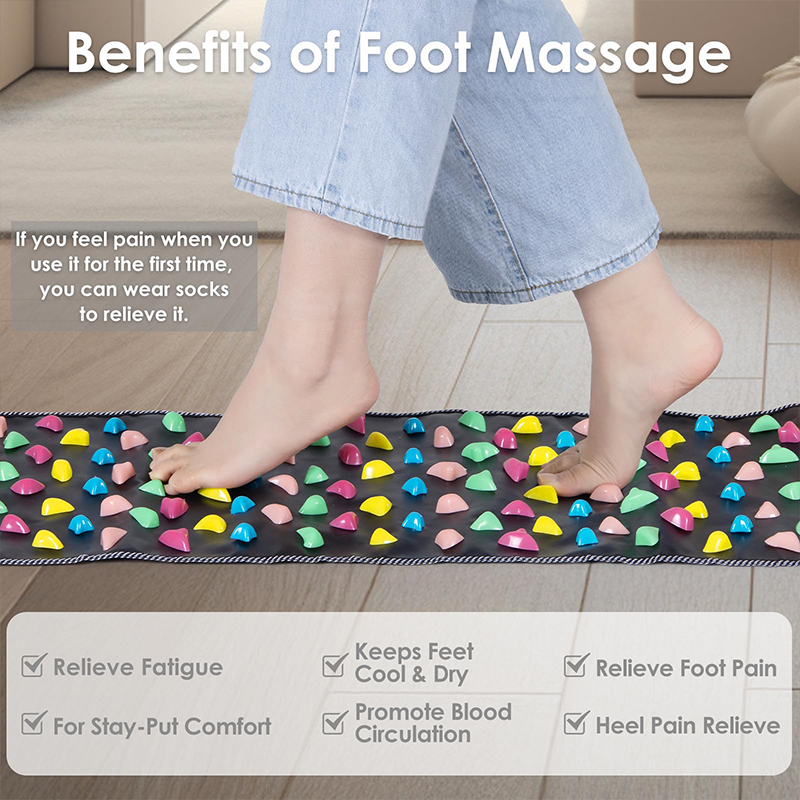
Made from high-grade TPR material for long-lasting shape retention, waterproof, and flexible enough to roll up and store anywhere .
And the best part? You don't need electricity. No cords. No charging. Just you, your feet, and the power of targeted pressure.
Step on. Breathe. Let the science work.
Here's What It Costs to Do Nothing
Think about how much you've spent trying to make your feet feel better:
-
$30 here for a foot roller. $50 there for a massage appointment. $40 for a spa that heats water—and not much else .
-
Medication for nerve pain. Supplements that promise circulation support but don't deliver.
All of it adds up.
And the cost isn't just financial—it's the persistent discomfort. It's the disrupted sleep. It's the way your feet feel like old, worn-out engines by the end of every single day.
What This Mat Costs—And What It Gives You Back
Just a few minutes daily is all it takes.
Stand on it for 10–20 minutes per day—your feet, your comfort level. First-timers might want to start with socks or a thin blanket . Your tolerance builds quickly. Before you know it, you'll be stepping onto it barefoot and letting the nodes do their job.
The suggested course? 10 consecutive days of use, followed by 5 days of rest . But many people use it daily because it just feels good.
And once you own it? No recurring costs. No batteries. No subscriptions. No monthly fees for comfort that never lasts.
Compare that to monthly massage appointments, electrolyte soaks, or pain patches that offer only temporary relief.
Your Feet Are the Foundation of Everything
Think about it:
Your feet carry you everywhere. They support your entire body weight. They absorb shock with every step. They're the foundation of your mobility, your independence, your ability to move through the world.
And yet—we treat them like an afterthought. Until they hurt. Until they ache. Until we can't ignore them anymore.
This is your chance to stop ignoring them.
Your nerve "switches" are waiting under your feet. All they need is the right signal to turn on.
Frequently Asked Questions
Can I use this if I have sensitive feet?
Absolutely. Start with thick socks or a towel on top of the mat. Gradually reduce the padding as you get used to the sensation .
How big is the mat?
The mat is designed to comfortably accommodate feet of all sizes—from small to extra large. No more crowding or toes hanging off the edge.
Is it safe?
Yes. This is a manual, non-electric mat designed for self-directed use. If you have specific health conditions, consult your doctor first—just as you would with any wellness practice.
How often should I use it?
Start with 10 minutes per day, especially if you're new to acupressure. Increase to 20 minutes as you build tolerance .
Do I have to stand on it?
You can stand, sit, or even use it for your hands or back . It's versatile.
Click here to claim a discounted Foot Massage Mat 👉👉👉(if it's still available) >>